What exactly is an invisible door?
Introduction: Understanding the Concept of an Invisible Door
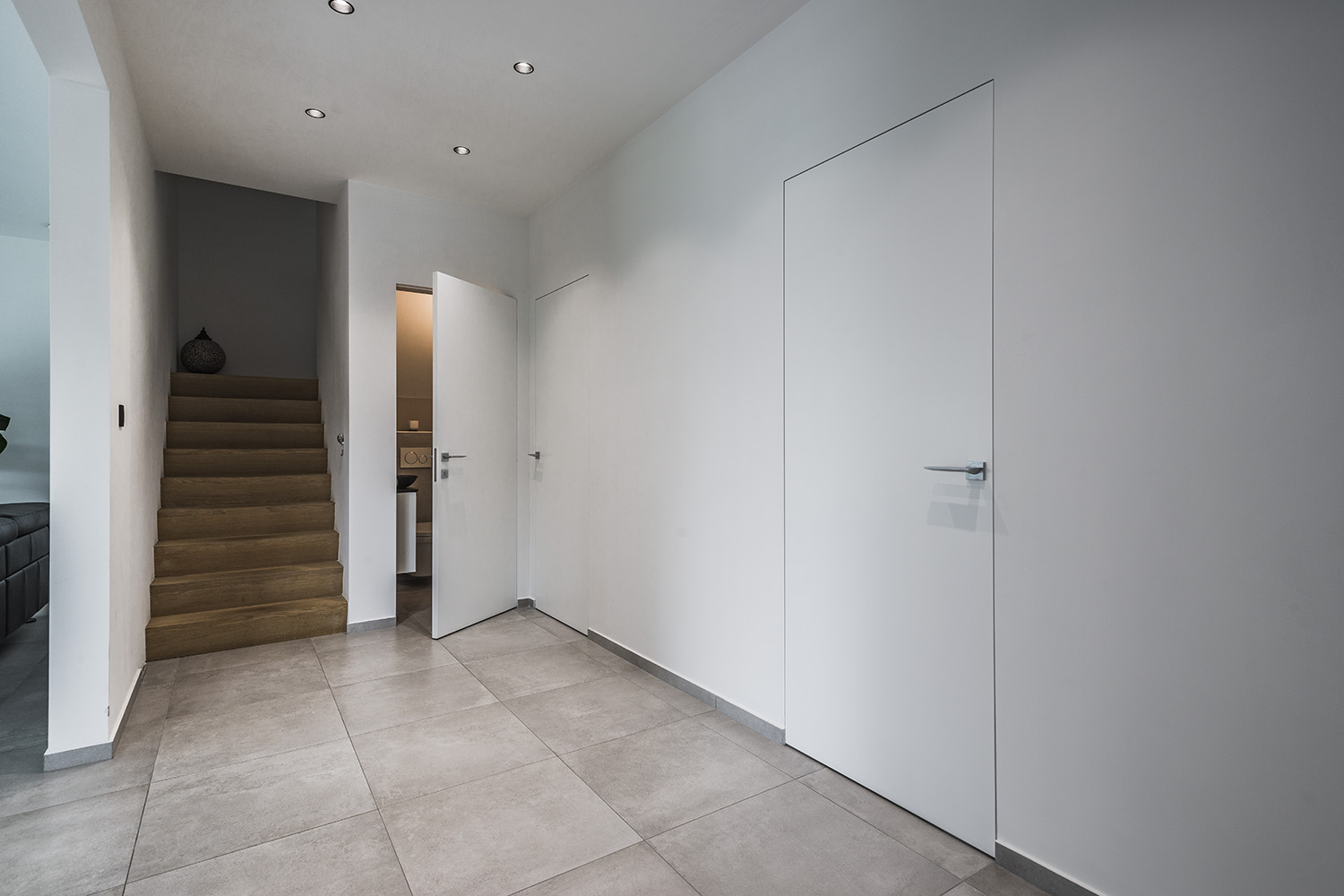
Invisible doors are revolutionizing modern architecture by offering a seamless and aesthetically pleasing solution for residential and commercial spaces. The term “invisible door” refers to a door that blends into the surrounding wall or space, making it nearly impossible to detect at first glance. Whether it’s for privacy, design, or functionality, invisible doors are quickly becoming a favorite among architects and interior designers.
What is an Invisible Door?
An invisible door, often called a hidden or secret door, is designed to disappear into its surroundings. It typically consists of a mechanism that allows it to blend into the wall, cabinetry, or other room elements. The frame, hinges, and door are often concealed behind drywall, wood panels, or wallpaper.
Unlike traditional doors, invisible doors don’t stand out visually. They are designed to look like part of the wall or other surfaces. The door might even be camouflaged to match the texture or color of the room, creating a smooth, uninterrupted surface. The magic behind an invisible door lies in its ability to function like any regular door without visual disruption.
Most invisible doors are equipped with modern, sleek hardware. Some use cutting-edge technology like touch sensors or remote-controlled systems, while others rely on traditional hinges with clever camouflaging. Depending on the design and space requirements, these doors can be either swinging or sliding.
The Popularity of Invisible Doors in Modern Architecture
Invisible doors are quickly gaining traction in contemporary architecture, especially in high-end residential properties and luxury commercial spaces. The primary appeal of invisible doors lies in their ability to create clean, minimalist designs without compromising functionality. As interior design trends shift towards open, airy spaces with minimal clutter, invisible doors fit seamlessly into these environments.
In modern architecture, where open floor plans and multifunctional spaces are becoming more common, invisible doors offer a unique solution. They allow homeowners and businesses to separate spaces while maintaining the flow and openness of a room. For example, a hidden door can create a secret room or office within a larger living area, giving privacy without affecting the design aesthetic.
Invisible doors are also used in sophisticated hotel lobbies, high-end restaurants, and private residences. Their ability to blend in with walls makes them particularly appealing for spaces where visual harmony and clean lines are crucial. Whether it’s a luxurious library, a home office, or a hidden wine cellar, invisible doors can enhance the space without drawing attention to themselves.
Why Are Invisible Doors Gaining Attention?
Invisible doors are gaining attention because they offer a fresh alternative to traditional door designs. They combine aesthetics with practicality, allowing designers to create seamless, uncluttered spaces. As more people embrace minimalism in their homes and workplaces, the demand for invisible doors has surged.
The key benefits driving their popularity include increased privacy and security, and enhanced design possibilities. Invisible doors can provide a hidden entrance to private areas or secure rooms, offering a level of confidentiality that is hard to achieve with traditional doors. An invisible door offers a perfect solution for those looking to keep certain rooms out of view, like home offices or storage spaces.
Additionally, with the rise of smart homes and automated technologies, invisible doors can easily integrate into modern, tech-savvy environments. Remote control or automated sliding systems allow these doors to be functional and futuristic, attracting tech enthusiasts and homeowners looking for cutting-edge solutions.
Invisible doors also help maximize space. Every inch counts in smaller apartments or homes, and hidden doors can make spaces feel larger and more open. The subtle integration of invisible doors eliminates the need for bulky door frames or handles, maintaining a clean, expansive look.
Summary
In conclusion, invisible doors are not just a trend—they’re an innovative solution that aligns with the future of interior design. Their ability to blend function, form, and technology makes them a must-have for modern living. As more people appreciate the value of minimalist, functional design, invisible doors will continue gaining momentum in residential and commercial spaces.
How Invisible Doors Work?
Invisible doors are more than just a design trend—they blend advanced technology and clever engineering perfectly. The magic of these doors lies in their ability to remain hidden while still serving their basic purpose. Understanding how they work can help you appreciate the technical marvel behind them. Let’s look at the technology, hidden mechanisms, and different types of invisible doors.
The Technology Behind Invisible Door
The technology behind invisible doors is what makes them so remarkable. These doors combine traditional mechanisms and modern innovations to achieve their “invisible” effect. The primary technology involved is concealed hinges and mechanisms that are hidden from view.
Some invisible doors use touch-sensitive activation, where a light tap or gentle push triggers the door to open. Others might rely on more advanced options, like electronic sensors or remote controls, allowing users to operate the door easily.
Integrating these systems ensures that the door remains functional despite being invisible to the eye. Magnetic locks and pneumatic systems are often used to secure the door when closed, ensuring it operates smoothly and stays in position when needed. In addition, smart home technology is usually incorporated, allowing invisible doors to be part of a larger, automated system. For instance, you can program your door to open when you approach, just like modern smart locks.
These technological advancements make invisible doors more convenient and increase their security and reliability, ensuring that the door operates without fail while remaining discreet.
Hidden Mechanisms: How Do Invisible Doors Operate?
The secret to how invisible doors work lies in their hidden mechanisms. Unlike traditional doors, which have visible frames and hinges, invisible doors are designed to blend into the surrounding architecture. This requires clever engineering to hide the door’s essential parts without affecting its function.
The door typically operates through concealed hinges and a hidden track system. The hinges are often mounted inside the wall for swing-style invisible doors, making them virtually invisible. These hinges are usually heavy-duty and designed to bear the door’s weight while remaining out of sight. Similarly, the track system used for sliding invisible doors is often recessed into the wall, keeping the door aligned and hidden when it’s not in use.
When the door is opened, it either swings outward like a traditional door or slides smoothly along a hidden track. Some systems feature automatic opening when sensors or remote controls are triggered, while others may require a manual push or pull.
For additional security and functionality, some invisible doors feature hidden locks concealed behind the door’s surface. These locks are often activated by a keypad, fingerprint scanner, or even a smart app, adding a layer of security that traditional doors can’t provide.
Types of Invisible Doors: Sliding vs. Swinging
Invisible doors come in two main types: sliding and swinging. Each type has unique advantages and is suited for different kinds of spaces.
Sliding Invisible Door
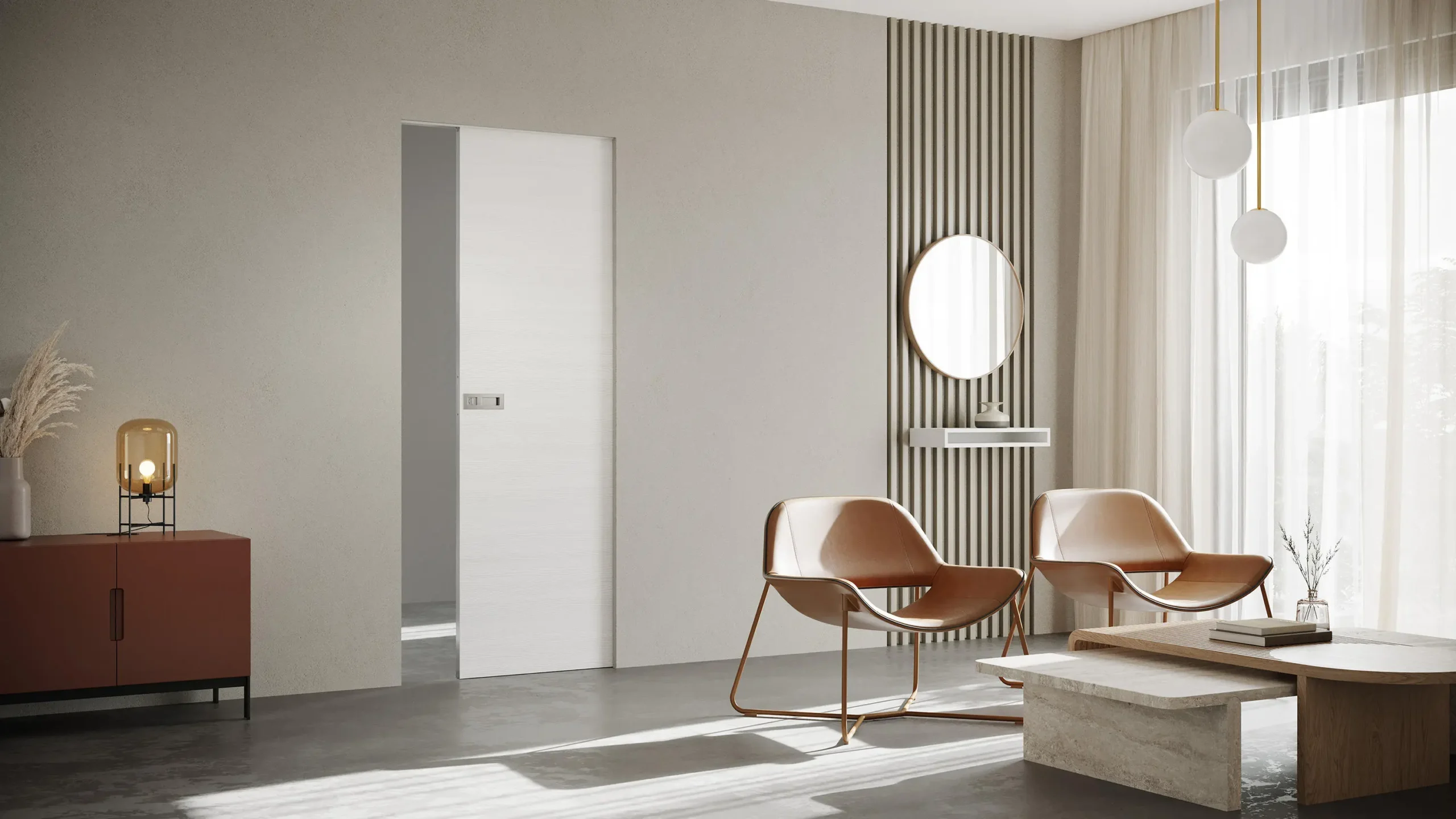
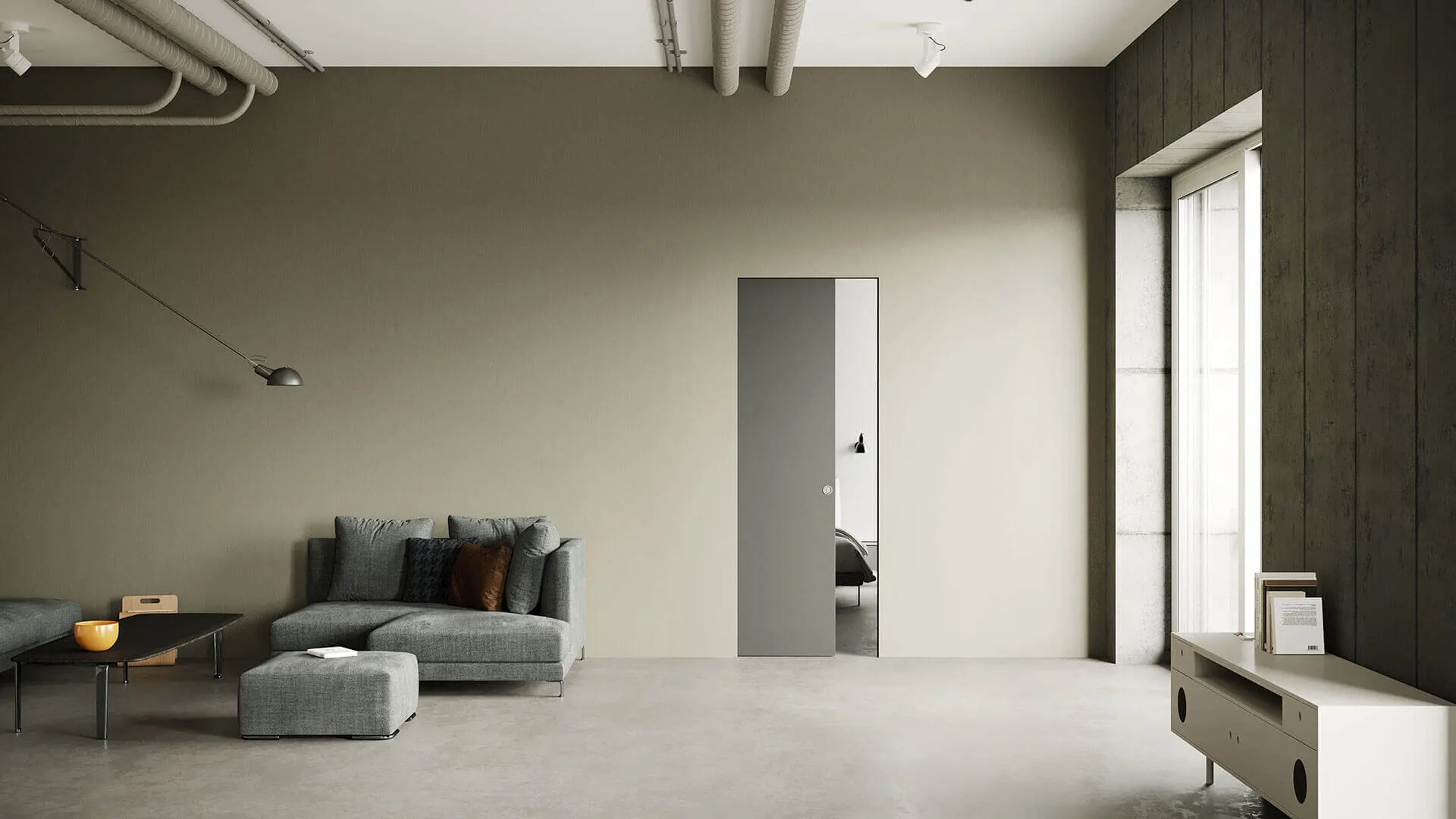
Sliding invisible doors are the most common type. They work by gliding smoothly along a hidden track, creating a sleek, modern look perfect for contemporary spaces. The sliding mechanism allows for a wide opening without requiring extra space to swing open. This makes them ideal for narrow hallways or rooms where space is limited.
Sliding invisible doors are typically used in closets, offices, or bathrooms where space optimization is key. The track system is hidden within the wall or ceiling, ensuring the door remains invisible when closed. These doors often operate automatically, adding a futuristic touch and making them more convenient for homeowners and businesses.
Swinging Invisible Door
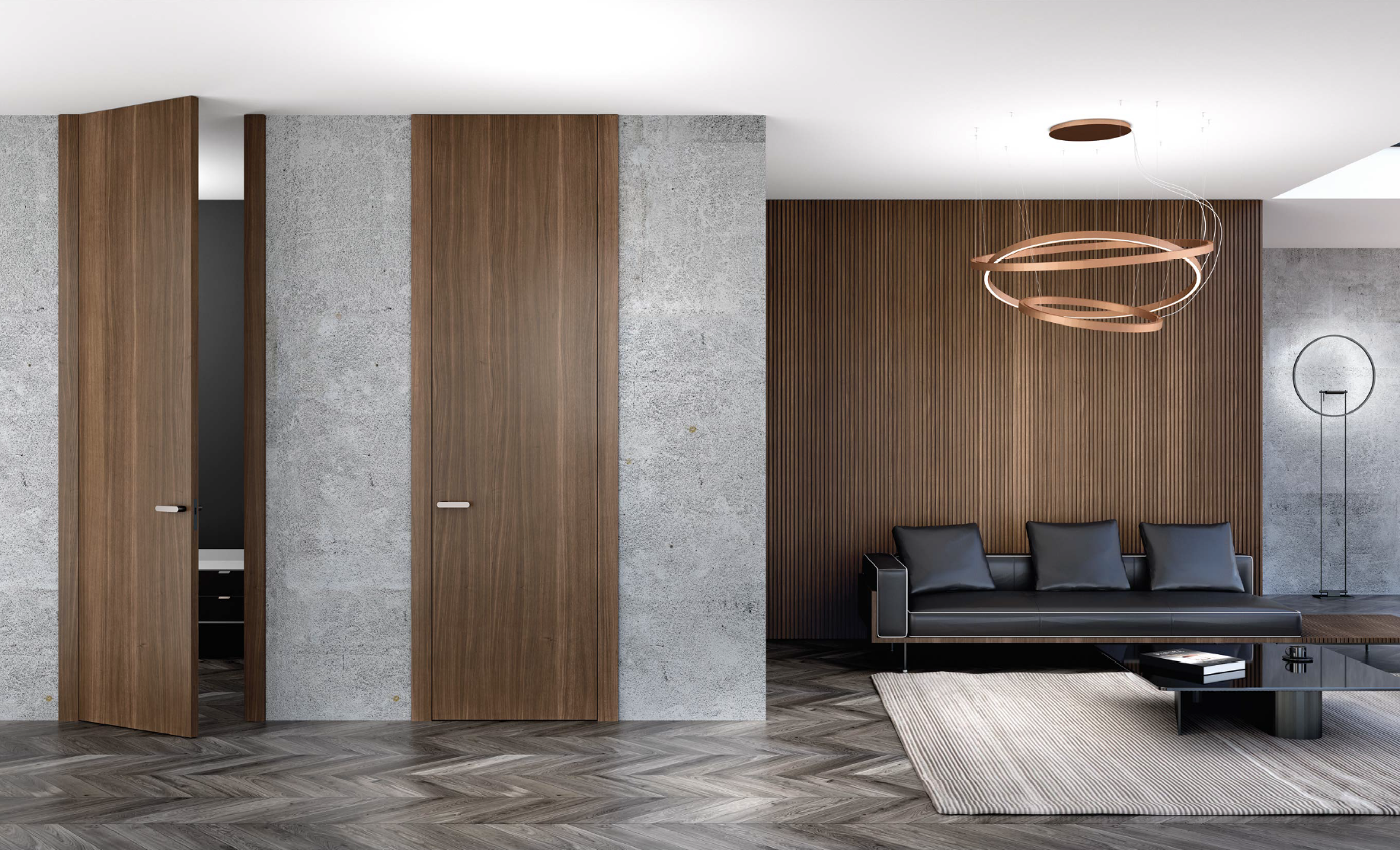
Swinging invisible doors, on the other hand, operate more like traditional doors but with hidden mechanisms. They are attached to concealed hinges, making them completely invisible when closed. Swinging doors are ideal for larger spaces with a broader opening, such as living rooms or libraries.
The advantage of swinging doors is that they don’t require the track systems that sliding doors use, which makes them slightly easier to install in certain types of walls. However, because they swing outward, they require more space to open and close smoothly.
Both types of invisible doors come with the same core principle of blending into their environment, but your choice between a sliding or swinging door will depend on the space you’re working with and the function you need from the door. Sliding doors are excellent for smaller, tighter spaces, while swinging doors may be more suitable for larger rooms where aesthetics and ease of use are a priority.
Benefits of Invisible Door
Invisible doors are not just a trend; they offer practical benefits beyond mere aesthetics. By incorporating advanced design and technology, these doors can enhance the functionality and style of any space. Let’s explore the key advantages of invisible doors, from maximizing space to improving privacy and energy efficiency.
Maximizing Space and Aesthetics
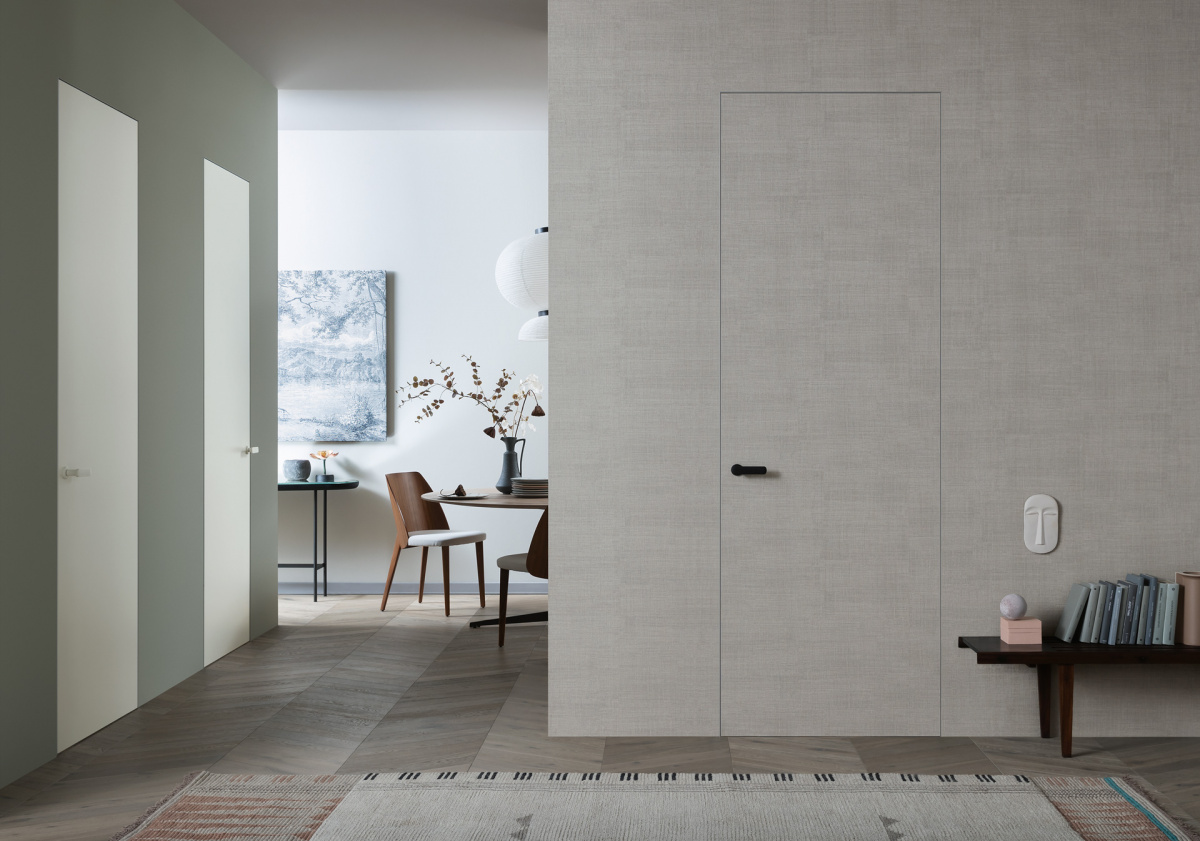
One of the biggest benefits of invisible doors is their ability to maximize space while maintaining a sleek, minimalist aesthetic. Because these doors blend seamlessly into the surrounding walls, they help create a sense of openness, making rooms feel larger and less cluttered.
In a traditional room, doors often occupy valuable space with frames, hinges, and handles. Invisible doors eliminate this by hiding the frame and hardware within the wall or surface. This results in a clean, uninterrupted wall that opens up the space. An invisible door can make the area feel more expansive in small apartments or homes, where every inch counts.
Beyond space, invisible doors are perfect for creating a modern, sophisticated look. They are ideal for contemporary interiors, where smooth lines and open plans are the norm. By choosing an invisible door, you can maintain the sleek and seamless design of the room while still having functional doors that provide privacy or separate areas.
Invisible Doors in Interior Design: A Game-Changer
Invisible doors are truly a game-changer in interior design. They offer designers the freedom to push creative boundaries without being limited by traditional door designs. In many cases, invisible doors can help achieve a minimalist look, which has become increasingly popular in modern interior design.
These doors allow the design of a room to flow naturally without interruption. Whether you’re designing a home, office, or commercial space, invisible doors can be incorporated into walls, bookshelves, or cabinetry to maintain a continuous, cohesive appearance. For instance, a hidden door behind a bookshelf can create a secret room, adding an element of surprise and sophistication.
Moreover, invisible doors allow for more flexible use of space. For example, invisible doors can divide rooms without the harsh lines of traditional partitions in an open-plan office or home. Instead of a bulky, obvious door, the space can be separated using a hidden door, maintaining the room’s flow while providing privacy.
Increased Privacy and Security Features
Invisible doors offer more than just a clean design; they can also enhance the privacy and security of your space. Hidden doors can create secure rooms or secret entrances, offering protection and confidentiality in homes and offices.
For example, invisible doors in high-end residential spaces or luxury properties are often used to access private areas such as home offices, wine cellars, or even safe rooms. These doors help maintain privacy without compromising the overall aesthetic. The hidden nature of the door makes it difficult for unauthorized people to identify the entrance, adding an extra layer of security.
In addition to physical security, invisible doors often incorporate advanced locking systems, such as magnetic locks, keypad entry, or fingerprint sensors, providing added peace of mind. In private homes, offices, or secure facilities, invisible doors offer a discreet way to keep areas private and protected.
Energy Efficiency and Temperature Control
Invisible doors can also contribute to energy efficiency and temperature control in your home or office. Since these doors blend seamlessly with the surrounding walls, they help eliminate gaps or drafts that can lead to heat loss or air leakage. This is especially important in spaces where temperature control is crucial, such as in energy-efficient homes or rooms with climate-sensitive equipment.
By ensuring that doors fit tightly into the wall, invisible doors help improve insulation, keeping the room at a stable temperature. This can reduce the need for constant heating or cooling, lowering energy bills. In homes with open floor plans, invisible doors also help maintain a consistent temperature across the space by preventing air from flowing freely between different rooms.
In addition, since invisible doors are often designed with modern materials, they can be equipped with thermal insulation or soundproofing features, further enhancing the space’s energy efficiency. This makes invisible doors a stylish addition to your home and an environmentally friendly one.
Where Can You Use Invisible Doors?
Invisible doors are incredibly versatile and can be used in a wide range of residential and commercial spaces. Their ability to blend seamlessly into the surrounding environment makes them a perfect choice for anyone looking to enhance the functionality and aesthetics of a room. Let’s explore where you can use invisible doors and how they can elevate different spaces.
Invisible Doors for Modern Homes and Apartments
Invisible doors are particularly popular in modern homes and apartments, where space optimization and clean, minimalist design are key. Traditional doors can sometimes feel bulky or disruptive in these living spaces. However, invisible doors can help maintain an open, airy feel by eliminating the need for visible door frames and handles.
In smaller apartments, invisible doors are especially useful. They help maximize the available space by blending seamlessly into walls, bookshelves, or other elements. For instance, an invisible door can serve as a hidden entrance to a home office or storage room, ensuring the design remains cohesive and uncluttered.
In luxury homes, invisible doors add a sophisticated touch. Imagine a hidden door leading to a wine cellar or a secret study room—the door’s invisibility keeps the room’s design sleek while still providing privacy and functionality. These doors also work well in open floor plans, where they can divide areas without obstructing the flow of the space.
Invisible Doors in Commercial Spaces
Invisible doors are becoming increasingly popular in commercial spaces like offices, restaurants, and retail stores. In offices, these doors can provide a sleek and professional look while offering the privacy and functionality needed for meeting rooms, private offices, or storage areas. Their ability to blend into the wall means that commercial spaces can feel more open and organized, without the visual clutter of traditional doors.
In restaurants or bars, invisible doors can separate staff areas from customer spaces or create hidden storage rooms. This is particularly useful for creating a seamless design that enhances the ambiance of the dining area. Whether a private dining room or an invisible kitchen door, these doors help maintain the design flow while providing functionality.
Retail spaces can also benefit from invisible doors. For example, a hidden door in a luxury boutique could lead to a private showroom or storage area. Invisible doors in commercial settings help businesses project a modern, high-end image while optimizing space and maintaining a clean, sophisticated atmosphere.
Invisible Doors for Safe Rooms or Secret Rooms
Creating safe or secret rooms is one of the most intriguing uses of invisible doors. These doors offer a high level of security while remaining hidden, making them ideal for homeowners or businesses that want to protect valuables or create a private, secure area.
Invisible doors can lead to a safe room, where personal belongings, sensitive documents, or even valuable collections are kept safe from view. The concealed design makes it difficult for unauthorized people to find the room, adding an extra layer of protection. Some invisible doors use advanced locking systems, such as fingerprint scanners, keypad entry, or smartphone-controlled locks, ensuring that only those with access can open the door.
In the case of secret rooms, invisible doors can lead to hidden spaces like private offices, libraries, or even hidden wine cellars. These doors often add an element of intrigue and surprise, turning an ordinary room into a hidden oasis. Whether used for personal security or as a creative addition to a home or office, invisible doors make adding a secretive yet functional space easy.
Applications in Hotels and Luxury Properties
Invisible doors are popular in hotels and luxury properties, where style and function are equally important. These doors often create private suites, hidden lounges, or luxury amenities that give guests a unique experience.
For instance, an invisible door could lead to a private VIP lounge or an exclusive spa area separate from the main hotel space. Using invisible doors allows hotel designers to maintain a clean and sophisticated look without compromising functionality. These doors help maintain the hotel’s or luxury property’s overall aesthetic, offering an elegant solution for separating spaces while keeping the design flowing seamlessly.
Invisible doors are also ideal for luxury apartments or high-end residential complexes. They can access hidden rooms, private libraries, or even secret balconies in these spaces. The appeal of invisible doors in such properties is their ability to offer luxury, security, and exclusivity without disrupting the interior design.
Installing an Invisible Door
Installing an invisible door is an exciting process that can transform the look and feel of any space. However, before diving into installation, it’s important to understand the key considerations, the difficulty level, and how to choose the right door for your needs. Let’s explore these aspects to help you make an informed decision.
What to Know Before Installing an Invisible Door
Before installing an invisible door, there are several important factors to consider. The first thing to think about is the wall structure. Invisible doors are designed to blend seamlessly with the surrounding walls, so the type of wall you have (whether drywall, brick, or wood) will influence the installation process. If your walls are unsuitable, additional work may be needed to create a smooth, flush surface for the door to fit properly.
Another thing to consider is placement. Invisible doors are ideal for areas where you want to preserve the flow of the space without interrupting the design. These doors work well in rooms with open plans or where you want to keep things private, such as offices, home libraries, or hidden rooms. Plan where you want the door and whether the surrounding layout will allow it.
Hardware is another critical consideration. Invisible doors come with specialized mechanisms that ensure smooth operation. These include hidden hinges, magnetic locks, or even automated systems. Ensure that you choose the right hardware that matches the door style and the room’s overall look. The system should work with the door material and size you choose.
Lastly, if you are working with a contractor, clearly communicating your design preferences and needs is essential. Installing an invisible door might require custom work, and working with an expert will ensure the door is installed properly, securely, and seamlessly.
Is It Difficult to Install Invisible Doors?
The difficulty of installing an invisible door depends on several factors, including the type of door, the complexity of the mechanism, and the existing wall structure. For DIY enthusiasts, installing an invisible door may be challenging unless you have experience with carpentry or wall construction. The process usually requires precise measurements and the ability to install hidden hardware, making it ideal for professionals specializing in custom door installations.
Installing a basic invisible door can be relatively straightforward if the space is well-prepared. For sliding invisible doors, for instance, the installation involves creating a recess in the wall for the door to slide smoothly. Swinging invisible doors, conversely, need concealed hinges to be integrated into the wall, which can be trickier to manage.
In general, while installing an invisible door yourself is possible, consulting with or hiring a professional installer is highly recommended. Experts will ensure that the door functions properly and remains durable over time. They can also help customize hardware or automation systems that may be part of your invisible door setup.
Choosing the Right Invisible Door for Your Space
Choosing the right invisible door is essential to achieving your space’s desired look and function. Start by considering the functionality of the door. Are you using the invisible door for privacy, like in a home office, or for a more decorative purpose, such as a hidden closet or secret room? The purpose will help determine whether you need a sliding or swinging door and what type of locking mechanisms or automation systems to include.
Next, consider the style and material of the door. Invisible doors can be made from various materials, including wood, glass, or metal. The material should match the existing decor of the room. For a clean, minimalist design, a wooden invisible door can blend effortlessly into a wooden wall. In contrast, an invisible glass door may be a great option to keep some visibility between rooms.
Also, think about the mechanisms. Some invisible doors are manual, requiring a simple push to open, while others are more advanced, with touch sensors or remote control systems. Choosing an invisible door with smart features might be a good fit if you’re looking for a modern, tech-savvy approach. Remember that these types of doors may require additional wiring or setup.
Finally, always ensure the door size fits your space. Invisible doors are custom-made, so precise measurements are crucial. The door should fit seamlessly into the existing design and function smoothly within the space’s dimensions.
Invisible Doors vs. Traditional Doors: What’s the Difference?
Invisible and traditional doors may serve the same basic function but differ greatly in design, functionality, cost, and long-term value. Understanding these differences can help you decide which door type fits your space and needs. Let’s examine how invisible doors compare to their traditional counterparts in several key areas.
Design and Functionality
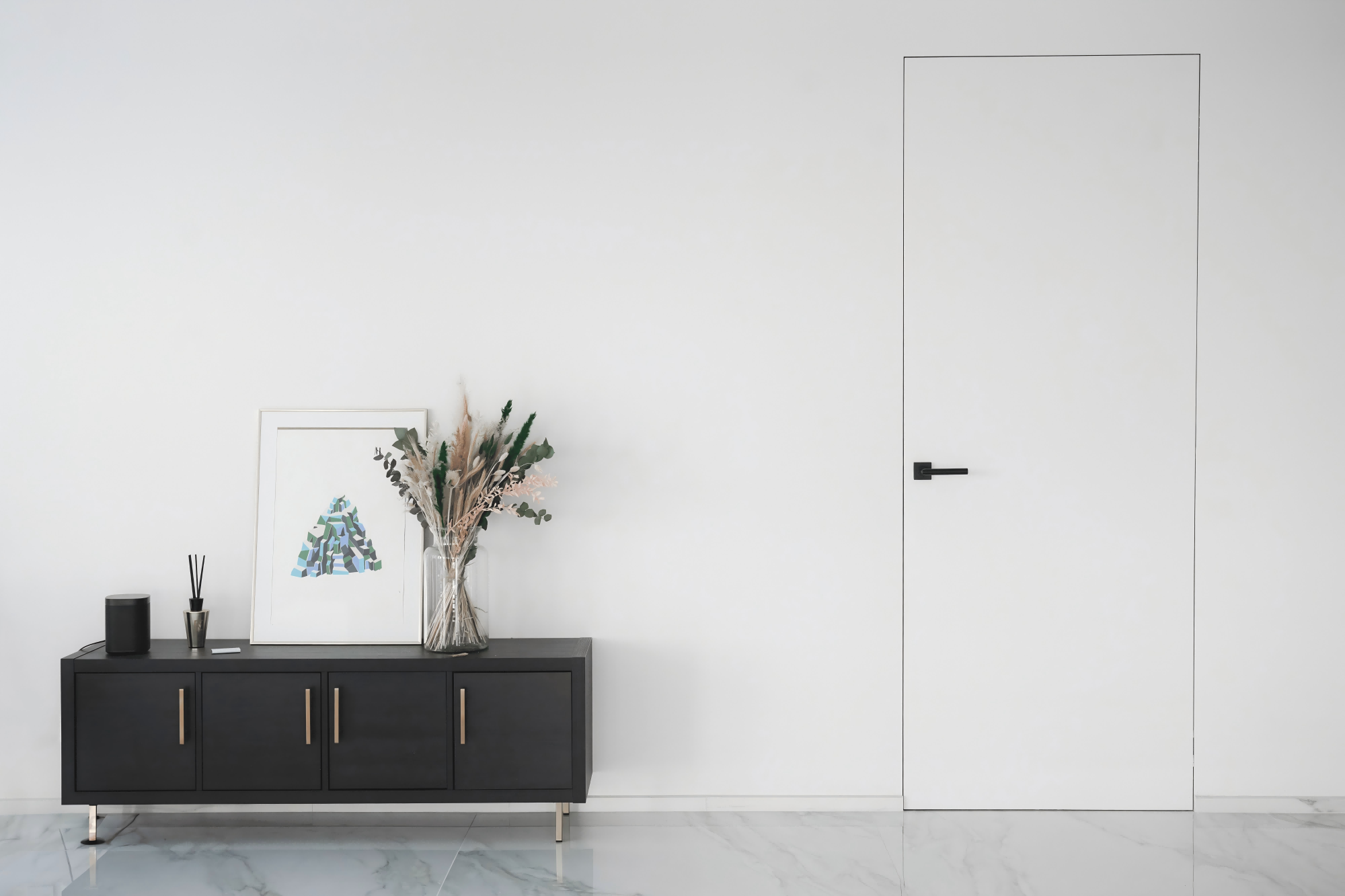
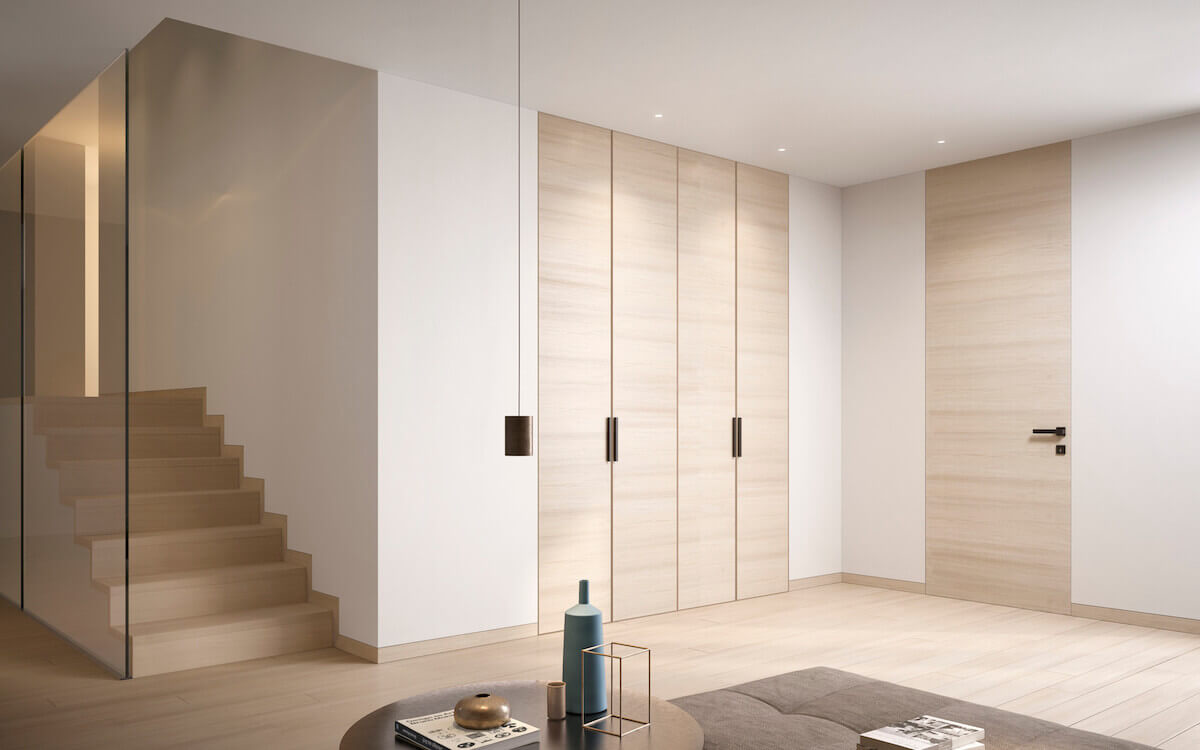
When it comes to design, invisible doors are all about seamless integration. Unlike traditional doors, which are often bulky and noticeable, invisible doors are designed to blend into their surroundings. They don’t have visible frames, handles, or hinges, making them perfect for minimalist and modern spaces where clean lines and open designs are important.
Invisible doors are often used in open floor plans to maintain the flow of space while allowing separate rooms when needed. For instance, an invisible door can lead to a hidden room or a private office without disrupting the room’s overall aesthetic. Depending on the design, the door may slide or swing, but the key feature is that it remains hidden when not in use.
Traditional doors, on the other hand, are typically more obtrusive. They are made with visible frames and hardware like handles and hinges, which can break up the design of a room. While functional, traditional doors often don’t offer the same visual harmony as invisible doors. In terms of functionality, traditional doors are straightforward, requiring basic swinging or sliding mechanisms, but they do not offer the sleek, hidden effect that invisible doors provide.
Cost Comparison and Long-Term Value
In terms of cost, traditional doors are generally more affordable. Basic wooden or metal doors can be found for as low as $50 to $200, depending on the material and size. However, when you factor in the installation cost, particularly if custom framing or complex hardware is required, the total cost can rise. Traditional doors also require maintenance over time, such as repainting, refinishing, or repairing worn-out hardware, adding to the ongoing expenses.
Due to their custom design and specialized materials, invisible doors are significantly more expensive. The cost for a basic invisible door can start at $500, with more advanced models featuring smart systems or custom designs running into the thousands. The installation process is also more involved and may require professional help, increasing costs.
Despite the higher initial investment, invisible doors offer long-term value in aesthetics, functionality, and security. They are built to last and are generally low-maintenance. Additionally, their ability to maximize space and enhance the design of a room can make them a worthy investment in the long run. Over time, the savings in energy efficiency and reduced wear on traditional door hardware may also offset the higher upfront cost of an invisible door.
Why Choose Invisible Doors Over Regular Doors?
So why should you choose an invisible door over a regular door? The main reasons come down to design and practicality. Invisible doors are perfect for modern living spaces or luxury homes where a seamless, uncluttered look is desired. If you value clean lines, open spaces, and minimalist decor, invisible doors are ideal. They allow you to divide rooms without disrupting the design flow, which traditional doors can’t always achieve.
Invisible doors are also a great choice if you need a hidden entrance or extra privacy. For example, you might use an invisible door to create a hidden room or to keep private areas such as home offices or safe rooms out of view. The concealed design makes it difficult for anyone to find the entrance, offering a level of security and privacy that traditional doors can’t provide.
Another compelling reason to choose invisible doors is their space-saving capabilities. Space is often at a premium in smaller apartments or homes, and traditional doors can feel bulky and intrusive. Invisible doors allow you to maximize every inch of space without sacrificing functionality or style.
Lastly, invisible doors are perfect for anyone looking to integrate smart technology into their home. Many invisible doors come with automated or touch-sensitive opening mechanisms, adding a futuristic, high-tech element to your space. Traditional doors generally lack these advanced features, making invisible doors the go-to choice for those who want both modern design and convenience.
Challenges and Limitations of Invisible Doors
While invisible doors offer many benefits, they come with their own set of challenges and limitations. Understanding these issues before installing an invisible door will help you manage expectations and plan accordingly. Let’s take a closer look at some of the potential challenges and how to overcome them.
Maintenance and Repair Concerns
One of the main challenges with invisible doors is maintenance and repair. Since these doors are designed to blend seamlessly into their surroundings, any issues such as malfunctioning mechanisms, door alignment problems, or wear and tear on the materials can be harder to address than traditional doors.
Invisible doors often use specialized components such as concealed hinges, sliding tracks, and magnetic locks. These parts are not always easy to access for repairs, and their functionality is critical to the door’s performance. If something goes wrong, it can be tricky to fix without removing parts of the wall or surrounding features, leading to potentially costly repairs.
Moreover, the materials used in invisible doors, like custom wood panels or high-end finishes, might require special care to maintain their appearance. These materials may not be as durable as traditional door materials and could suffer from scratches or dings over time. Keeping the door in pristine condition may require professional servicing or even replacing certain parts, which can add to maintenance costs.
To minimize maintenance issues, it’s essential to invest in high-quality materials and ensure a professional installs the door. Regular inspections and upkeep will help keep the door functioning smoothly for years.
Potential Drawbacks of Invisible Door
While invisible doors can be a sleek addition to any space, they come with some potential drawbacks that you should be aware of.
Installation Complexity
Invisible doors often require custom installation. The wall must be designed to accommodate the hidden hardware and mechanism, which can make installation more complicated and time-consuming compared to traditional doors. If your walls aren’t suited for this kind of installation, you may need to make modifications, adding to the time and cost.
Higher Initial Costs
Invisible doors are typically more expensive than regular doors. Not only are the materials more specialized, but the installation process can also be more involved. Custom designs and advanced hardware systems add up quickly, significantly increasing the overall cost. This higher upfront investment may be a consideration if you’re on a tight budget.
Limited Customization in Certain Spaces
Invisible doors work best in minimalist or contemporary designs. If your home or office follows a more traditional style, it may be harder to integrate an invisible door seamlessly. Additionally, because these doors are often designed with custom materials, they may not be as easy to modify or adapt if you want to make changes in the future.
Security Concerns
Although invisible doors offer privacy, some models may not be as secure as traditional doors. For instance, invisible doors might be more vulnerable to unauthorized access if not equipped with the right locking mechanisms. Choosing an invisible door with a reliable security system is important, especially if it’s meant to act as a hidden entrance or safe room.
How to Overcome the Challenges of Invisible Doors?
While invisible doors come with challenges, there are ways to overcome these limitations and ensure your investment is worth it.
Hire a Professional Installer
To avoid complications during installation, always work with a professional with experience in invisible door installations. A skilled installer can assess your space and walls, ensuring the door fits properly and functions smoothly. They will also be able to handle any unexpected issues during installation.
Choose High-Quality Materials
Investing in high-quality materials can help reduce long-term maintenance issues. Opt for durable finishes that can withstand wear and tear. For example, choose scratch-resistant panels or reinforced hinges to ensure the door’s durability. Higher-quality materials will not only last longer but also require less frequent repairs.
Routine Maintenance and Inspections
Like any other home feature, invisible doors require regular maintenance. Schedule periodic inspections to ensure the hinges, tracks, and locks function properly. Cleaning and lubricating the moving parts will also help prevent friction and wear over time, providing the door operates smoothly.
Invest in Reliable Security Features
Choose an invisible door with a secure locking system to address security concerns. Options like magnetic locks, fingerprint access, or smart door systems can enhance the security of invisible doors and protect your home or business from unauthorized access.
Consider Long-Term Costs
While invisible doors may have a higher initial cost, consider the long-term benefits. Their ability to enhance the design and increase space utilization makes them a valuable investment in the long run. Additionally, their minimalistic nature can help reduce the need for additional partitions, which may save on future renovation costs.
Relate FAQ
What exactly is an invisible door?
An invisible door is a type of door that blends seamlessly into the wall or surrounding area, making it nearly invisible to the eye. Modern and minimalist designs often use these doors to create a clean, uninterrupted aesthetic. Invisible doors are typically hidden in plain sight, usually equipped with concealed hinges and handles that make them nearly impossible to detect unless opened.
How does an invisible door work?
Invisible doors work through a combination of design and technology. The door frame and surface are carefully concealed within the surrounding wall, which is often made of the same material and color as the adjacent wall to enhance the illusion. Specialized hinges, mechanisms, and handles ensure the door functions like a regular one while remaining unobtrusive.
What are the benefits of an invisible door?
While flat doors are most commonly used for interior spaces, some flat doors are designed specifically for exterior use. For these applications, solid core flush doors are recommended as they offer better insulation and security. However, they might require more maintenance compared to exterior panel doors, particularly in harsh weather conditions.
Can an invisible door be unstalled in any home?
Yes, invisible doors can be installed in almost any home, although they are more commonly found in modern, contemporary, and luxury homes. The installation process may require a professional, especially for custom-built versions that involve hidden hinges, motors, and mechanisms. It's important to ensure that the surrounding walls are designed to accommodate this seamless integration.
Where can invisible doors be used?
Invisible doors are versatile and can be used in various areas of a home or commercial space, including:
- Secret Rooms: Perfect for creating hidden rooms or storage spaces.
- Home Offices: Ideal for creating a private, seamless workspace.
- Libraries or Wine Cellars: Often used to conceal libraries or wine cellars behind walls.
- Bathrooms or Closets: For a cleaner, minimalist design.
How do you open an invisible door?
Invisible doors can be opened in several ways, depending on the design. Some use a touch latch system activated by pressing a specific area on the door, while others employ a magnetic or motorized mechanism. Some designs even use hidden handles that blend in with the wall, providing a concealed way to open the door.